 By Admin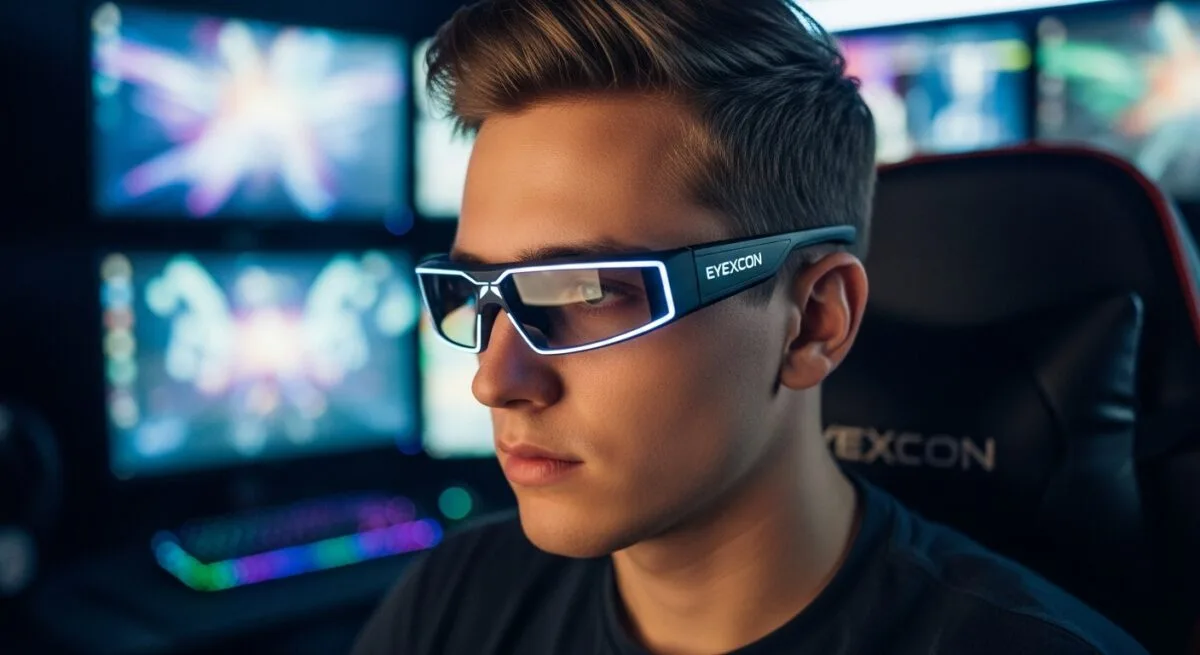
The topic “Tommy Jacobs Gaming EyeXCon” centers on a next-generation gaming innovation linked to Tommy Jacobs. From recent developments in 2025 and into 2026, Tommy Jacobs appears as a key figure in gaming design and esports vision. He drives forward-thinking ideas that blend eye-tracking technology with immersive play.
EyeXCon stands out as a breakthrough gaming console or platform. It integrates eye-tracking, adaptive AI, high-resolution processing like 8K, support for VR headsets and AR glasses, haptic feedback, and mixed reality features. This setup creates deeper interaction where games respond to where you look, how you feel, and your focus level.
Gamers search for this term because it promises to change competitive esports and casual sessions. Think about long hours in tournaments where eye strain hits hard. EyeXCon aims to fix that with better visual clarity, comfort, and performance boosts. Some sources describe it as a full console, others as a concept or event-focused experience tied to gaming communities.
In this article, we explore who Tommy Jacobs is, what makes EyeXCon special, its core features, benefits, potential drawbacks, real-world uses, and why it matters now in 2026. We include practical tips for gamers who want to prepare for this tech shift.
Tommy Jacobs brings fresh energy to the gaming world. He focuses on esports vision and player performance. His work centers on how eyes affect gameplay. Jacobs shares insights through events, social media, and collaborations.
He engages fans at gaming expos and tournaments. At events like EyexCon gatherings, he connects with pros and newcomers. He talks about setups that reduce fatigue and sharpen focus. His approach mixes passion for retro games with modern tech pushes.
Jacobs pushes boundaries beyond standard consoles. He highlights eye comfort during intense matches. Pro players in FPS or MOBAs need quick reactions. Jacobs sees eye-tracking as the next step to train vision and reduce strain.
In 2025, his name gained traction with discussions around innovative consoles. By early 2026, updates show his influence in designs that use biometrics for better immersion. He collaborates on ideas that make gaming accessible and fun for more people.
His background includes community building. He shares tips on hardware that supports long sessions. Fans follow him for honest takes on what works in real play.
Tommy Jacobs Gaming EyeXCon refers to a next-gen gaming platform shaped by Jacobs’ vision. It goes beyond traditional consoles like PlayStation or Xbox. The core idea uses your eyes as a control method alongside hands.
Eye-tracking cameras follow your gaze in real time. This lets you select menus, aim in games, or trigger actions with looks. Adaptive AI learns your habits and adjusts difficulty or visuals. For example, if you tire, the system softens brightness or slows pace.
The platform supports 8K resolution for sharp details. It works with VR headsets for full dives and AR glasses for mixed overlays. Haptic feedback vibrates based on in-game events. Mixed reality blends virtual elements with your room.
This setup targets esports pros who need every edge. It also helps casual gamers enjoy deeper stories. Accessibility improves for players with limited hand movement since eyes control parts of the game.
In 2025 and 2026 updates, prototypes and demos show smoother integration. Developers add games that use eye input natively. Community feedback drives changes like better calibration for different face shapes.
EyeXCon packs advanced tools that set it apart.
Cameras built into the console or headset track pupil movement with high accuracy. Latency stays low so actions feel instant. You look at an enemy to lock on or scan a map quickly.
AI watches play patterns. It tweaks enemy behavior, suggests strategies, or changes environments based on focus. If eyes dart too much, it signals fatigue and offers breaks.
Support for 8K output delivers crisp images. Colors pop and details stand out in open-world games. Upscaling tech makes older titles look fresh.
Plug in VR headsets for 360-degree worlds. AR glasses overlay stats or hints in real space. Switch between modes fast for different moods.
Controllers and wearables vibrate with precision. Feel footsteps, weapon recoil, or wind. Audio syncs with visuals for full sense wrap.
Voice commands and eye gestures navigate menus. Layouts fit personal styles. Save profiles for multiple users.
These features work together. A racer game might dim edges if you stare at the road too long to prevent strain. An RPG could highlight quests where your gaze lingers.
Competitive scenes demand peak performance. EyeXCon helps in several ways.
First, it reduces eye strain. Long tournaments cause dry eyes and blur. Built-in comfort modes adjust light and contrast. Pros report clearer vision after hours.
Second, reaction times improve. Gaze-based aiming cuts input delay in shooters. Studies show eye control can shave milliseconds off responses.
Third, training tools build focus. Games include modes to practice peripheral vision or quick scans. Esports teams use similar tech now, and EyeXCon brings it home.
Real example: In a 2025 tournament demo, players used eye lock to hold positions while hands handled movement. Teams won more rounds with less fatigue.
Statistics from gaming health reports show pros average 8-12 hour sessions. Eye strain affects 70 percent of them. Tools like EyeXCon could drop that number.
Not every gamer uses hands fully. EyeXCon opens doors.
Players with motor challenges control menus and actions via eyes. Simple games become playable without sticks. Complex titles add partial eye support.
Color-blind modes and audio cues pair with visuals. Adaptive AI detects struggle and simplifies controls.
In 2026, more developers add compatibility. This grows the player base and makes gaming inclusive.
Immersion pulls you in deeper. EyeXCon achieves this through natural interaction.
Look around in VR to explore without turning your head much. In mixed reality, virtual characters react to your stare. Stories feel personal when choices follow gaze.
Haptics add touch. Feel rain or explosions. Audio spatializes to match eye direction.
Casual players enjoy relaxed sessions. Sit back and guide adventures with looks. It reduces physical effort for cozy nights.
No tech is perfect. EyeXCon faces hurdles.
Calibration takes time at first. Different lighting or glasses affect accuracy. Updates in 2025 improved this, but some users need tweaks.
Privacy concerns arise with eye data. Cameras track gaze, so companies must protect info. Good brands offer local processing and clear policies.
Cost could start high. Advanced sensors and AI raise price above standard consoles. As production scales in 2026, prices may drop.
Battery life for portable parts matters. VR headsets drain fast with eye-tracking on.
Eye strain still possible if overused. Breaks remain key even with comfort features.
Esports pros gain the biggest edge. They train vision and reduce fatigue for tournaments.
Casual gamers who want deeper immersion love mixed reality modes.
People with accessibility needs find new freedom.
Developers and creators experiment with gaze mechanics for fresh games.
Beginners learn controls easier with eye assists.
EyeXCon differs from PlayStation 5, Xbox Series X, and Nintendo Switch.
PlayStation 5 offers strong graphics and exclusives but no native eye-tracking.
Xbox Series X focuses on power and Game Pass but lacks gaze controls.
Nintendo Switch brings portability but stays traditional.
EyeXCon adds eye input, AI adaptation, and mixed reality. It trades some raw power for interaction depth.
In 2026, it fits as a premium option for innovators.
Here is a quick comparison table in Markdown:
| Feature | EyeXCon (Tommy Jacobs) | PlayStation 5 | Xbox Series X | Nintendo Switch |
| Eye-Tracking | Yes, built-in | No | No | No |
| Adaptive AI | Yes | Limited | Limited | No |
| 8K Support | Yes | Partial | Yes | No |
| VR/AR Integration | Full | PS VR2 | Limited | No |
| Haptic Feedback | Advanced | Good | Good | Basic |
| Accessibility Focus | High | Medium | Medium | Medium |
| Price Range (est. 2026) | High | Medium | Medium | Low |
| Best For | Immersive & Competitive | Exclusives | Power & Cloud | Portability |
This table shows EyeXCon leads in future-focused features.
In late 2025, demos showcased smoother eye calibration. AI learned faster from play sessions.
Early 2026 brought partnerships with game studios. Titles added gaze mechanics for puzzles and combat.
Community events let fans test prototypes. Feedback led to better privacy settings and comfort modes.
Tommy Jacobs shared progress on social channels. He stressed player health over hype.
Start with eye health basics. Use the 20-20-20 rule: every 20 minutes, look 20 feet away for 20 seconds.
Adjust room lighting to match screen. Avoid glare.
When EyeXCon arrives, calibrate in a quiet space. Test short sessions first.
Pair with ergonomic setups. Good chair and desk height help.
Follow updates from official sources. Join communities for tips.
Try current eye-tracking tools like Tobii for PC to prepare.
Tommy Jacobs Gaming EyeXCon marks a bold step in gaming. It blends eye-tracking, AI, and mixed reality into one platform. This creates experiences that feel natural and deep.
For pros, it offers real performance gains. For casual users, it adds wonder. Accessibility improves lives.
My top recommendation goes to competitive gamers and tech enthusiasts. They gain the most from gaze controls and adaptation.
If you seek the future of play, watch EyeXCon closely. It could reshape how we game.
It uses eye-tracking and adaptive AI to respond to your gaze and focus. Other consoles rely on hands and buttons only.
Yes, many titles work with updates or backward compatibility. New games build in gaze features for best results.
It includes comfort tools to reduce strain. Take breaks and follow health guidelines for any screen time.
Competitive gamers, immersion seekers, and those needing accessibility options benefit most.
It sits higher due to advanced tech. Expect drops as adoption grows.
Absolutely. Relaxed modes and easy controls make it fun for everyone.