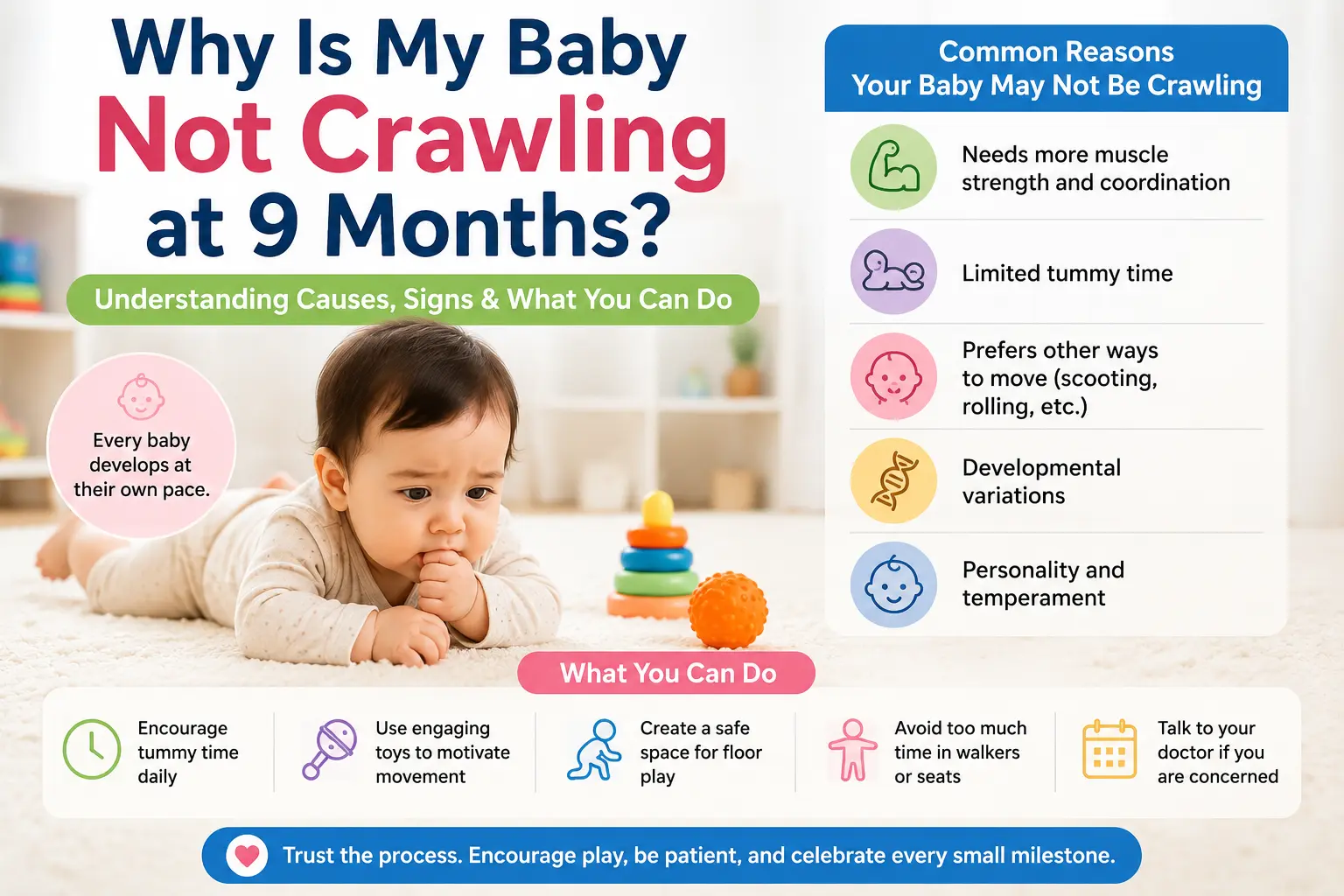
Many parents eagerly wait for the day their baby starts crawling. It is one of the most exciting milestones during the first year of life. However, if your baby reaches 9 months and still is not crawling, it is natural to feel concerned.
The good news is that not all babies crawl at the same age. Some begin crawling as early as 6 months, while others may skip crawling entirely and move directly to standing or walking. Every child develops at their own pace.
Understanding what is normal and knowing when to seek professional advice can help parents feel more confident about their baby’s development.
Is It Normal for a 9-Month-Old Baby Not to Crawl?
Yes, in many cases it is completely normal.
Developmental milestones provide general guidelines, but they are not strict rules. Some babies crawl early, while others take longer to develop the strength and coordination needed for crawling.
At 9 months, many babies are:
- Sitting independently
- Rolling in both directions
- Reaching for toys
- Moving around by scooting
- Pulling themselves forward on their stomach
- Attempting to stand with support
If your baby is making progress in other areas, a delay in crawling may not be a cause for concern.
Common Reasons Why a Baby May Not Crawl at 9 Months
1. Every Baby Develops Differently
Development is not a race.
Some babies focus on developing communication skills, while others concentrate on physical movement. A baby who is learning new sounds and social interactions may simply reach mobility milestones later.
2. Limited Tummy Time
Tummy time helps strengthen the muscles needed for crawling.
Without enough tummy time, babies may take longer to develop:
- Arm strength
- Shoulder stability
- Core muscles
- Coordination
Consistent daily tummy time can encourage movement and crawling readiness.
3. Your Baby Uses Other Ways to Move
Not all babies crawl traditionally.
Some babies:
- Bottom shuffle
- Roll across the floor
- Scoot backward
- Pivot while sitting
These alternative movement patterns are often completely normal.
4. Personality Differences
Some babies are naturally cautious.
A baby who enjoys observing their surroundings may be less motivated to move than a highly active child who wants to explore everything.
5. Physical Development Variations
Babies with larger body sizes or different muscle development patterns sometimes take longer to crawl because movement requires greater effort and coordination.
Signs Your Baby Is Preparing to Crawl
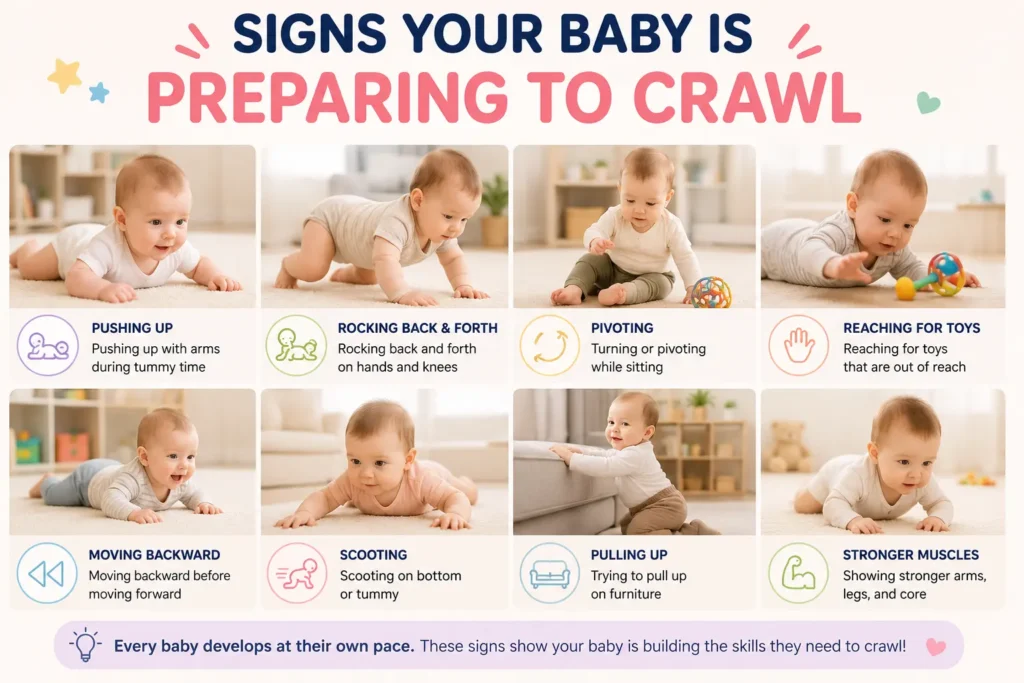
Even if crawling has not started yet, certain behaviors suggest that your baby is getting ready.
Look for signs such as:
- Rocking back and forth on hands and knees
- Pushing up during tummy time
- Reaching for distant toys
- Pivoting while sitting
- Moving backward before moving forward
- Attempting to pull up on furniture
These behaviors indicate growing strength and coordination.
How to Encourage Crawling
Create Opportunities for Floor Play
Babies need plenty of space to practice movement.
Place your baby on a clean, safe floor area where they can freely explore.
Use Favorite Toys
Position interesting toys slightly out of reach.
This encourages your baby to stretch, pivot, and eventually move toward the object.
Increase Tummy Time
Several short tummy time sessions throughout the day are often more effective than one long session.
Get Down on the Floor
Babies learn through observation.
Crawl beside your baby or demonstrate movement to encourage imitation.
Reduce Time in Containers
Excessive time in:
- Swings
- Walkers
- Bouncers
- Car seats
can reduce opportunities for practicing movement skills.
When Should Parents Be Concerned?
Most babies who are not crawling at 9 months do not have developmental problems.
However, you should discuss concerns with a pediatrician if your baby:
- Cannot sit independently
- Shows very poor muscle control
- Appears unusually stiff or floppy
- Does not attempt any movement
- Has difficulty using one side of the body
- Loses previously learned skills
Early evaluation can identify potential concerns and provide support if needed.
Can a Baby Skip Crawling Completely?
Yes.
Some healthy babies never crawl.
Instead, they may:
- Scoot
- Roll
- Pull themselves up
- Cruise along furniture
- Walk earlier than expected
Many adults who skipped crawling as babies experienced completely normal development.
Common Mistakes Parents Make
Comparing Their Baby to Others
Every child develops differently. Comparing your baby to friends’ children can create unnecessary stress.
Forcing Milestones
Pushing a baby to crawl before they are ready can lead to frustration.
Ignoring Progress in Other Areas
A baby may not be crawling but could be making excellent progress in communication, social interaction, and cognitive development.
Spending Too Much Time Online
Internet searches often highlight extreme cases rather than typical development patterns.
Expert Tips for Supporting Healthy Development
- Encourage daily floor play.
- Read and talk to your baby frequently.
- Celebrate small milestones.
- Provide a safe environment for exploration.
- Attend regular pediatric checkups.
- Focus on overall development rather than a single milestone.
Final Thoughts
If your baby is not crawling at 9 months, there is often no reason to panic. Babies develop at different rates, and crawling is just one milestone among many. Focus on your child’s overall growth, encourage daily movement opportunities, and celebrate each new achievement.
Most importantly, remember that development is a journey, not a competition. With patience, support, and plenty of opportunities to explore, your baby will continue building the skills needed for future milestones.
Frequently Asked Questions
Not necessarily. Many healthy babies begin crawling after 9 months or skip crawling entirely.
Most babies begin crawling between 6 and 10 months.
Yes. Tummy time helps build the strength needed for crawling.
Absolutely. Many babies use scooting or rolling as their primary form of movement.
Yes. Some babies skip crawling and move directly to standing and walking.
If your baby shows limited movement, poor muscle control, or other developmental concerns, consult your pediatrician.